


As entrepreneurship and small business are being reshaped by emerging technologies, new forms of innovation, and increasingly interconnected markets, university curricula also need to change with them. The Diaspora4Innovation supported revising entrepreneurship and small business courses in Albania to better reflect the opportunities and challenges of today’s global and digital entrepreneurial ecosystem. The aim was not simply to refresh course materials, but to make learning more relevant to the new realities students are likely to face: digital business models, innovation with emerging technologies, sustainability challenges, changing entrepreneurial finance, and more uncertain markets and entrepreneurial ecosystems.
Dr. Endrit Kromidha, Associate Professor of Entrepreneurship and Innovation at the University of Birmingham, played a leading role in driving impact across two Albanian universities. Working with Dr. Blendi Shima at the Canadian Institute of Technology (CIT), with the support of Prof. Eugen Musta, Vice Dean of the Faculty of Economy and Head of the Business Administration Department, and with Dr. Gentjan Ulaj at the European University of Tirana (UNYT), alongside Dr. Vehap Kola in supporting the research dimension at UNYT, Dr. Kromidha helped turn the project into more than a set of isolated teaching activities. The collaboration became a shared effort to strengthen curricula, but also widen academic exchange within Albania and internationally, connecting students and staff more closely to international teaching, research and entrepreneurial impact practices.
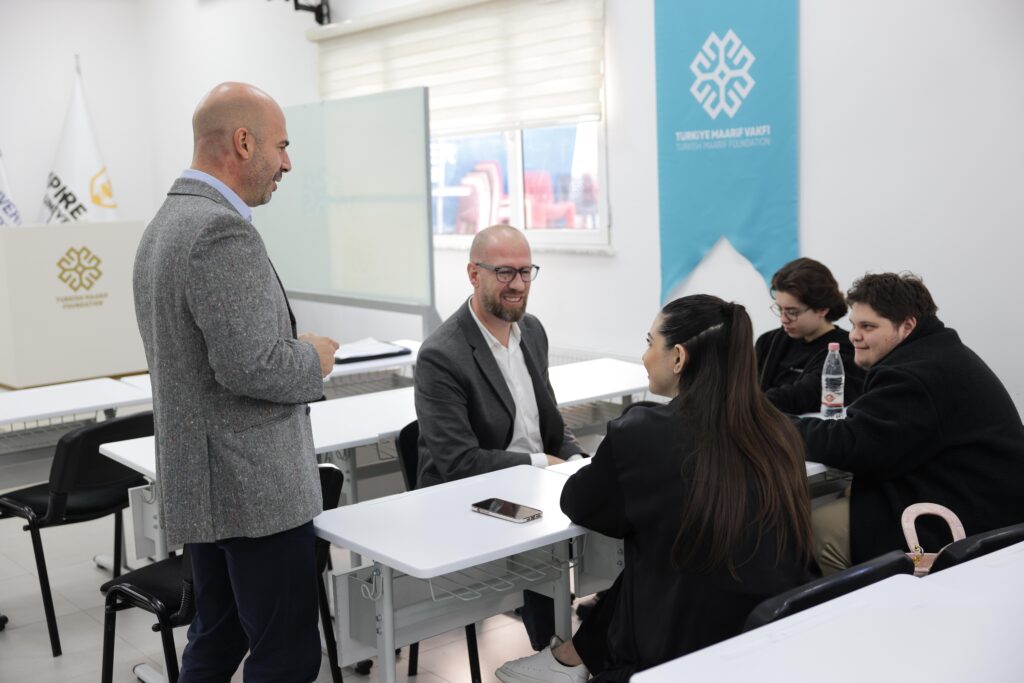
At CIT, the collaboration focused on the Entrepreneurship and Innovation course, while at UNYT, it focused on revising the Small Business Management course. In both cases, the work was done jointly with the local module leads, and it went beyond minor updates. The courses were revised to better prepare students for entrepreneurship of today and tomorrow: as a process shaped by innovation, experimentation, ecosystems, digital transformation, and global exposure. Across the two curricula, strong emphasis was placed on themes such as innovation strategy, entrepreneurial ecosystems, digital entrepreneurship, AI for SMEs, technology adoption, sustainable entrepreneurship, circular economy thinking, entrepreneurial finance, and new venture growth.
Students were encouraged to rethink critically the use and limitations of practical frameworks such as the Value Proposition Canvas and the Lean Business Model Canvas when working towards new entrepreneurship and innovation realities. Concepts such as lean startup experimentation, hypothesis-driven entrepreneurship, opportunity recognition, prototyping, and investor pitch development helped shift classroom discussion away from static business planning and toward a more applied, iterative, and opportunity-focused understanding of entrepreneurship.
What gave the collaboration its strength was Dr. Kromidha’s role in connecting international ideas and comparative cases to local challenges in order to make them relevant. Rather than simply bringing comparative examples from abroad, he worked with his colleagues, Dr Ulaj and Dr Shima to adapt the content to the Albanian context, encouraging students to think critically about how digital innovation, sustainability, and ecosystem opportunities might work within local institutional and market conditions. This made the revised curricula more relatable and useful. Students were not only learning concepts, but also discussing how those concepts could shape their own paths in the new global and digital entrepreneurial ecosystems.
The impact of this work can be seen not only in the curricula themselves, but also in the student response. At UNYT, feedback collected through 58 completed evaluation forms showed 93% positive overall satisfaction and 94% positive evaluation of the diaspora scholar’s teaching style. In addition, 88% of students agreed that the course clearly introduced innovative concepts, while 93% saw it as strongly relevant to their studies and future careers. These are important indicators that the collaboration was not only well received, but also meaningful in shaping how students experienced entrepreneurship education.
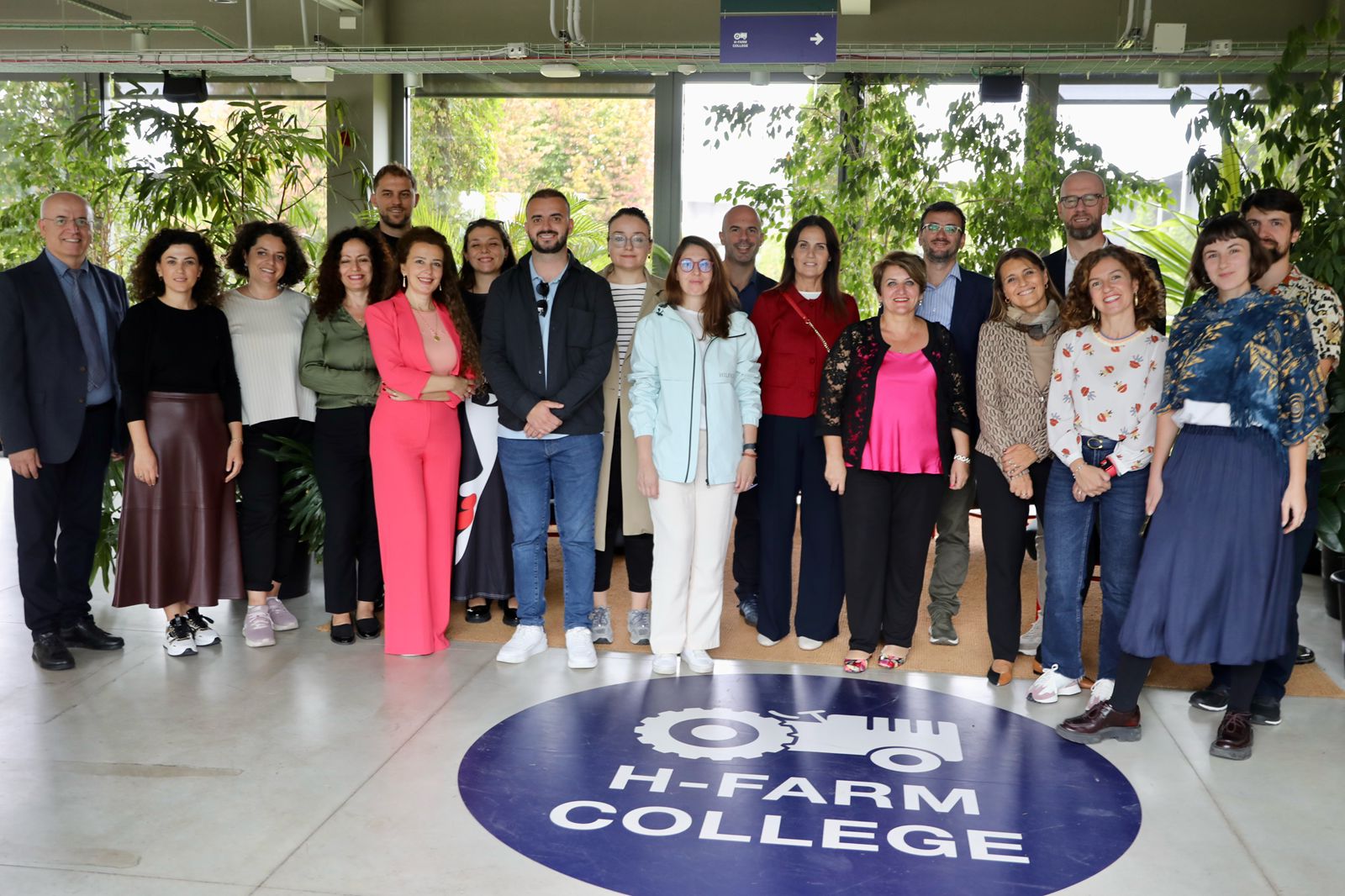
Dr. Kromidha’s contribution also extended beyond classroom teaching. Across the project, he helped create a bridge between universities rather than working with each institution in isolation. Experience from the curriculum work at CIT informed discussions at UNYT and vice versa, allowing faculty to exchange views on course design, student engagement, and the kinds of knowledge and tools that entrepreneurship students increasingly need. In this sense, the project supported not only diaspora-local collaboration, but also horizontal learning across Albanian universities.
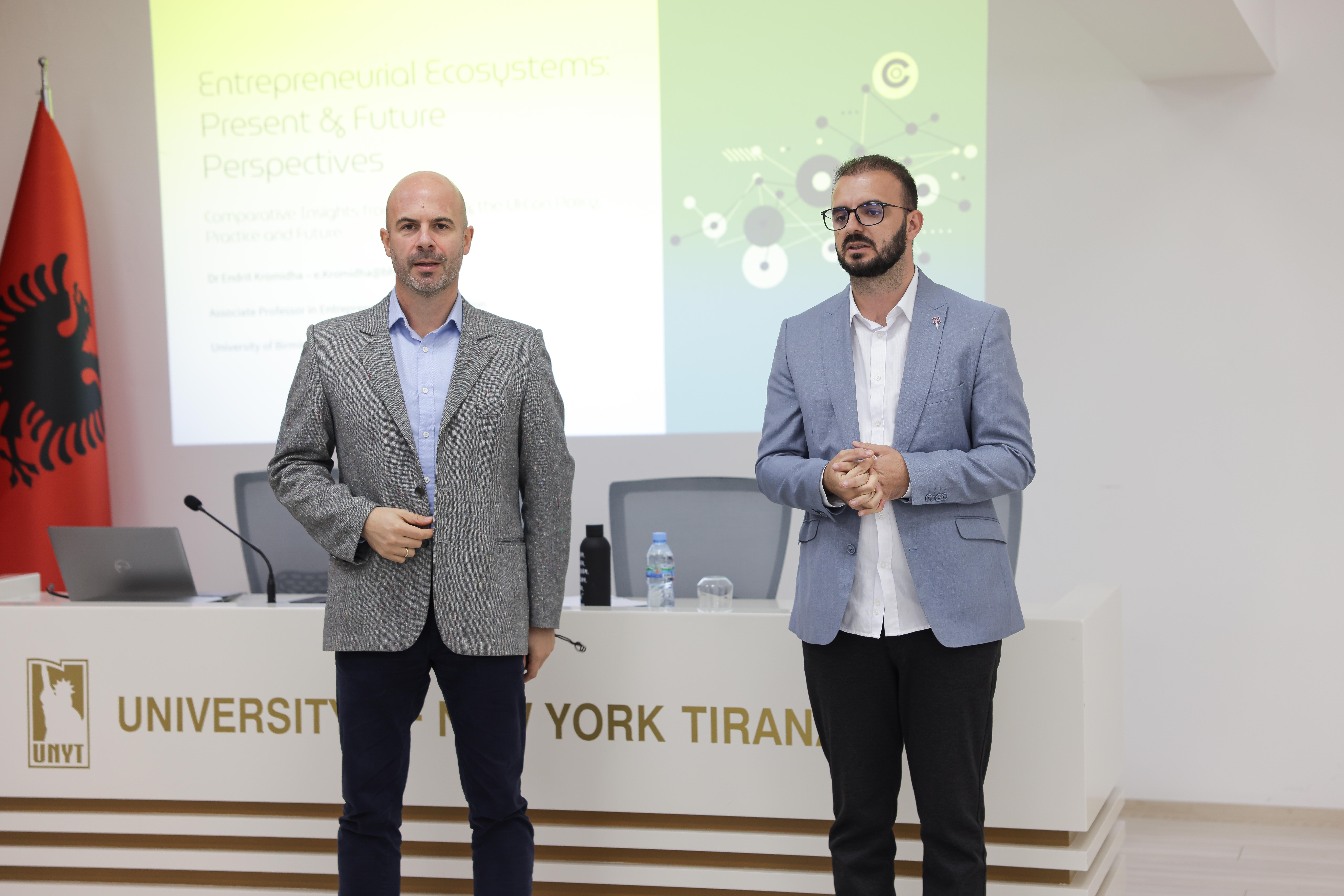
This broader role is part of what made the impact more substantial. During the project, Dr. Kromidha delivered two open lectures that extended the value of the collaboration beyond the revised courses themselves. At UNYT, he gave a lecture on qualitative research methods for business and social sciences. At CIT, he delivered an open lecture on getting published in business and entrepreneurship journals. These sessions created wider opportunities for students and faculty to engage with research methods, academic publishing, and international scholarly practice.
The collaboration also developed into research. Together with Dr. Gentjan Ulaj and Dr. Vehap Kola at UNYT, Dr. Kromidha submitted a literature review paper on the future of entrepreneurial ecosystems to the British Academy of Management conference planned to take place in London in September 2026. This shows that the project’s impact did not stop at teaching, but it also helped open a pathway toward joint research, linking curriculum reform with knowledge, impact and future institutional partnerships.
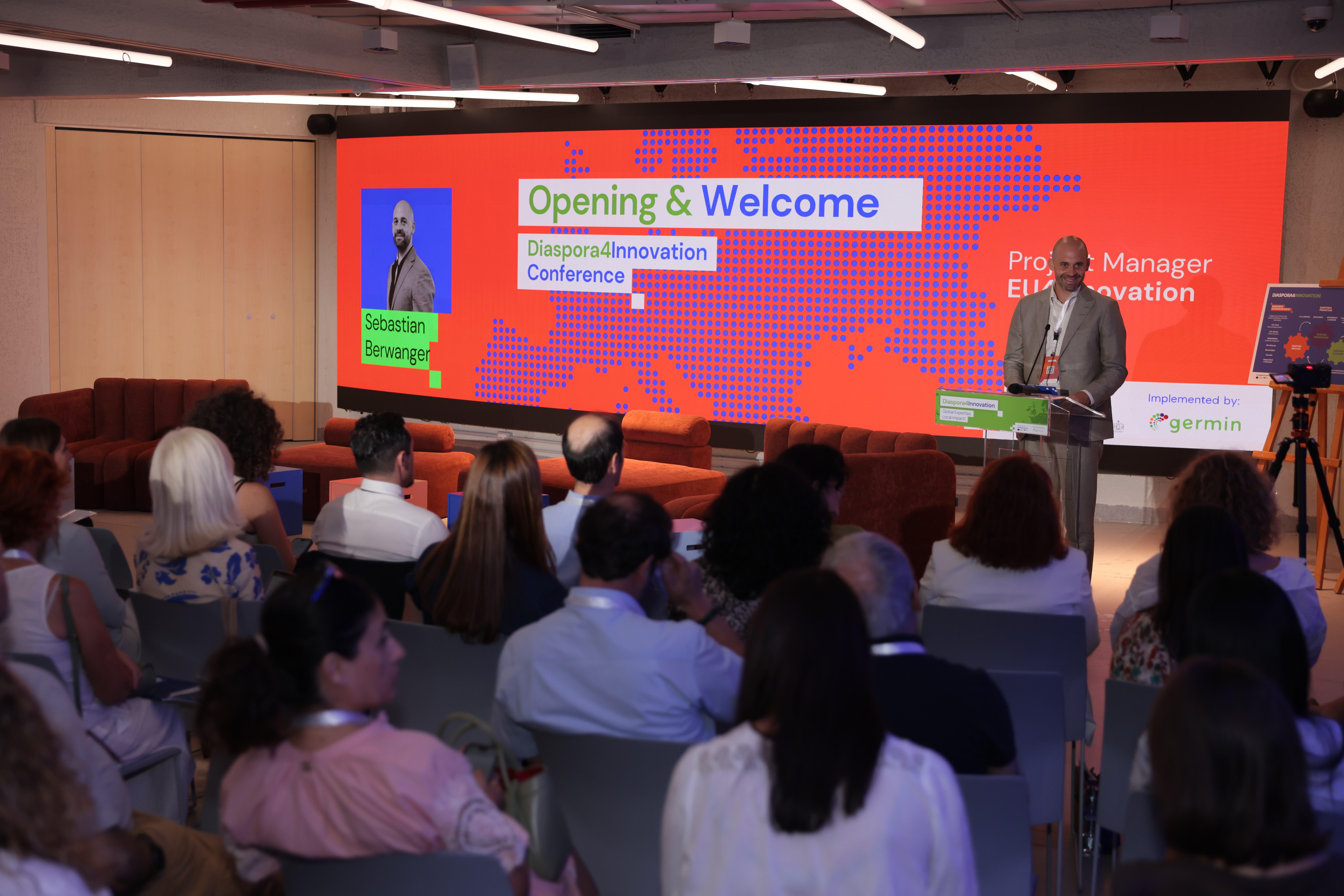
Diaspora engagement is often understood as a short-term transfer of expertise from abroad. In this case, the collaboration presents a stronger model of international and local cross-university collaborations at multiple levels of teaching, research and impact. Dr. Kromidha helped drive curriculum revision across two universities, contributed to the strengthening of two entrepreneurship-related courses, delivered two open lectures, supported cross-university exchange, and co-developed a conference paper with local colleagues. More importantly, these activities created a ripple effect. Students gained more future-oriented and practically grounded learning. Faculty gained new ideas for course design and teaching. Universities gained stronger links to international academic perspectives and to each other. Through partnerships with Dr. Blendi Shima at CIT and Dr. Gentjan Ulaj at UNYT, supported by Prof. Eugen Musta and Dr. Vehap Kola, the project demonstrates how entrepreneurship education in Albania can become more contemporary, connected, and responsive to a global and digital economy.
On behalf of the European Union, Germany, and Sweden, @eu_4_innovation is supporting Germin to facilitate the circulation of Albania’s global knowledge, locally.